Why Logistics Makes India a Powerful Business Destination in 2026
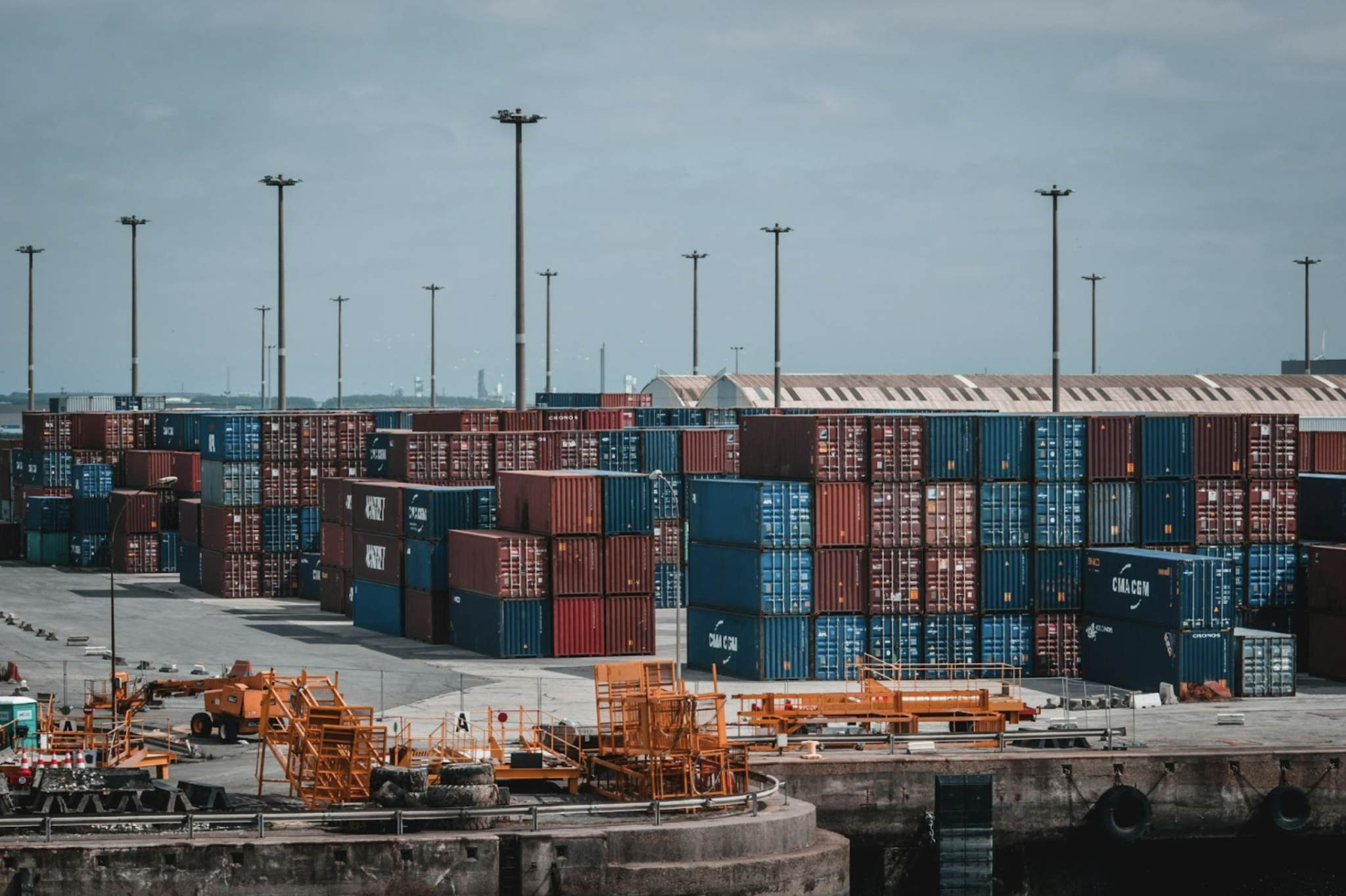
Logistics has become one of the strongest reasons global companies are choosing India as a place to manufacture, source, and sell. Reliable movement of goods lowers production costs, connects factories to global value chains, and makes Indian-made products competitive on price and speed — the qualities that decide where multinationals put their next plant.
For years, weak infrastructure and high logistics costs were the standard argument against building in India. That argument is weakening fast as highways, freight corridors, ports, and digital systems are rebuilt at scale.
This article explains why logistics is turning India into a powerful business destination in 2026: how it shapes investment decisions, what is driving the China-plus-one manufacturing shift, the infrastructure being put in place, and the challenges that still remain.
Why logistics decides where companies build
Logistics directly determines a country's manufacturing competitiveness, because the cost of moving goods is built into the final price of everything a factory ships. India's logistics costs run near 16% of GDP, above the global average of roughly 8%, according to Invest India — and closing that gap is the lever that makes Indian production more attractive.
Every rupee saved in transport, warehousing, and handling flows straight to competitiveness. Lower logistics costs let manufacturers price aggressively in export markets and still protect their margins.
Speed matters as much as cost. Faster, more predictable movement of goods lets companies run leaner inventory and respond to global demand without the delays that once made India a harder place to operate.
Investors weigh these factors before committing capital. A site-selection decision balances labour, land, incentives, and market access — but logistics quality increasingly tips the balance, because it touches every one of those other factors at once.
The China-plus-one moment and India's manufacturing surge
India is capturing a historic shift as global companies diversify supply chains away from a single-country dependence on China. Foreign direct investment rose to roughly US$81 billion in FY2024-25, a 14% increase, with manufacturing FDI growing faster than services for the first time in years, according to government data reported via the Press Information Bureau.
Policy is amplifying that pull. The Production Linked Incentive (PLI) scheme spans 14 strategic sectors with an outlay of about ₹1.97 lakh crore (roughly US$26 billion), making it the largest manufacturing-support programme in India's history.
Electronics leads the way
Electronics is the clearest proof that the strategy is working. India now assembles roughly 25% of global iPhone output, up from about 18% in 2024, and has become the world's second-largest mobile phone manufacturer.
This is exactly the kind of high-value, export-oriented production that strong logistics enables. Without dependable ports, freight corridors, and last-mile networks, companies like Apple's suppliers could not move components in and finished devices out at the volumes they now do.
The pattern extends well beyond phones. Automakers, electronics suppliers, and consumer-goods firms are expanding Indian capacity to serve both the domestic market and exports, and each new plant raises demand for the warehousing and freight capacity that supports it.
A logistics backbone being rebuilt
India is rebuilding its physical logistics backbone at a pace and scale rarely seen before. The country's national highway network has expanded to about 146,342 km, up from 91,287 km in 2014, according to figures from the Ministry of Road Transport and Highways.
Roads and rail
The Bharatmala programme has driven much of the road build-out, with more than 21,000 km of national highways constructed under its first phase by September 2025. These corridors link industrial clusters directly to ports and consumption centres.
Rail is being transformed by dedicated freight corridors built solely for cargo. The Eastern and Western Dedicated Freight Corridors together span about 3,260 km, with the Western corridor connecting Jawaharlal Nehru Port near Mumbai to Dadri in the north, cutting transit times for export cargo.
Ports and turnaround
Ports have become dramatically more efficient, removing a long-standing barrier to trade. Average vessel turnaround time at India's major ports fell to about 49 hours in FY2024-25, down from 93.59 hours in 2013-14, according to the Ministry of Ports, Shipping and Waterways.
Faster turnaround means exporters spend less time and money waiting at the dock. Inland waterways are also being revived to add a cheaper, lower-emission freight option alongside road and rail.
Together these modes are starting to function as one network rather than disconnected pieces. A container can move from a coastal port along a dedicated freight corridor to an inland logistics park, then onto a highway for final delivery, with each leg handing off to the next more smoothly than before.
Policy turning logistics into an advantage
Government policy has deliberately converted logistics from a weakness into a selling point since 2021. Prime Minister Narendra Modi launched the PM GatiShakti National Master Plan on 13 October 2021 and the National Logistics Policy on 17 September 2022, as recorded by the Prime Minister's Office.
PM GatiShakti brings the data of different ministries onto a single Geographic Information System platform, so multimodal projects are planned together rather than in silos. The National Logistics Policy targets cutting logistics costs to single digits as a share of GDP and lifting India into the top 25 of the World Bank's Logistics Performance Index by 2030.
At the policy's launch, the Prime Minister tied it directly to the business case for India:
"The National Logistics Policy has immense potential for the development of infrastructure, for expansion of business and increasing employment opportunities. We have to realize these possibilities together." (Prime Minister Narendra Modi, National Logistics Policy launch, 17 September 2022.)
What global businesses gain
For global businesses, India's improving logistics translates into measurable operating advantages. India ranked 38th of 139 economies in the World Bank's 2023 Logistics Performance Index, up six places from 44th in 2018 — a signal that trade is getting easier.
Multimodal logistics parks connected to freight corridors give manufacturers warehousing, distribution, and last-mile connectivity in one location. These hubs attract private investment and let companies plug into national and export networks quickly.
The combination is what makes India viable as an export base, not just a domestic market. Companies can now serve both India's 1.4 billion consumers and global buyers from the same footprint.
Predictability is part of the appeal. As port turnaround and freight transit times become more reliable, businesses can commit to delivery promises and just-in-time schedules that depend on goods arriving when expected.
The skills and jobs dimension
A modern logistics sector is also one of India's largest job engines, employing more than 22 million people. As the sector formalises and digitises, it is creating demand for higher-skilled roles in warehouse management, data analysis, and supply-chain technology.
This talent base is itself a draw for investors. The Logistics Sector Skill Council is training workers in new technologies, and packaging, sorting, and warehouse roles are opening employment opportunities, including for women entering the formal workforce.
A deeper pool of trained logistics professionals lowers the risk of expanding in India. Companies that scale operations need supervisors, planners, and technicians who can run modern facilities, and a growing skilled workforce makes that scaling far easier to plan.
Challenges that still need fixing
India's logistics advantage is real but incomplete, and several gaps still raise the cost of doing business. Logistics costs remain near 16% of GDP, and more than 90% of the sector is unorganised, which makes service quality uneven across regions.
Technology adoption is also uneven. Big data and artificial intelligence are not yet used widely enough to deliver a fully integrated, affordable, and reliable national logistics system.
Rebalancing freight toward rail and waterways, deepening digital platforms, and extending reliable service into rural areas are the next steps. Each one further strengthens the case for building in India.
Consistency across states is the other piece. Because logistics performance still varies widely between regions, a company's experience can depend heavily on where it builds — and narrowing that variation is essential to making the whole country attractive, not just a handful of leading states.
The outlook for India as a business destination
India's trajectory points toward a stronger position as a regional and global logistics hub. Manufacturing FDI reached about US$19 billion in FY2024-25, around 23.5% of total inflows and an 18% rise on the year, signalling that investors increasingly see India as a place to make goods, not just sell them.
Sustained investment in corridors, ports, and digital systems is steadily narrowing the cost gap that once held the country back. As that gap closes, the calculus for locating production in India improves with every percentage point.
The World Bank, which has supported many of India's rail, road, and inland-waterway projects, has framed the stakes directly. In an opinion piece, its Country Director for India argued:
"India's push to improve its logistics performance will not only improve its trade competitiveness, but will also increase jobs, and enable the country to emerge as a logistics hub for the region and beyond." (Auguste Tano Kouamé, World Bank Country Director for India, writing in The Financial Express, 17 July 2024.)
For companies weighing where to invest, the message is increasingly clear: logistics is no longer the reason to avoid India, but one of the reasons to choose it. The businesses that move early stand to lock in capacity and supplier relationships before the rest of the market catches up.
Methodology
This article draws on government and institutional sources, including the Press Information Bureau, the Prime Minister's Office, Invest India, the Ministry of Road Transport and Highways, the Ministry of Ports, Shipping and Waterways, and the World Bank's Logistics Performance Index. The closing quotation is taken from a named opinion piece by the World Bank's Country Director for India, published in The Financial Express on 17 July 2024, and the policy quotation from the official record of the National Logistics Policy launch.
FDI, investment, and infrastructure figures are drawn from official data and are dated to their reporting period; where multiple estimates exist, the most recent official figure is used. Some manufacturing-share figures are industry estimates and are cited as such. Figures reflect the most recent data available at the time of the publication's last review.
Frequently asked questions
Why is logistics important for India as a business destination?
Logistics determines how cheaply and quickly goods can move, which directly affects manufacturing competitiveness. Lower logistics costs and faster delivery make Indian-made products more attractive to global buyers and investors deciding where to build.
What is the China-plus-one strategy and how does India benefit?
China-plus-one is the practice of diversifying manufacturing beyond China to reduce risk. India benefits as companies relocate or add capacity, helped by a 14% rise in FDI to roughly US$81 billion in FY2024-25 and the PLI scheme's US$26 billion in incentives.
How much has India's infrastructure improved?
India's national highway network grew to about 146,342 km from 91,287 km in 2014, dedicated freight corridors now span about 3,260 km, and major-port vessel turnaround fell to roughly 49 hours from 93.59 hours in 2013-14.
What is India's logistics cost target?
The National Logistics Policy aims to cut logistics costs to single digits as a share of GDP, down from near 16%, and to lift India into the top 25 of the World Bank's Logistics Performance Index by 2030.
Key takeaways
Logistics is now a core reason global companies choose India, because lower transport and handling costs directly improve manufacturing competitiveness.
FDI rose to roughly US$81 billion in FY2024-25, with manufacturing FDI growing faster than services and India assembling about 25% of global iPhone output.
Infrastructure has scaled fast: national highways at about 146,342 km, dedicated freight corridors spanning 3,260 km, and port turnaround down to roughly 49 hours.
PM GatiShakti and the National Logistics Policy aim to cut logistics costs to single digits and reach the top 25 of the World Bank LPI by 2030.
Remaining gaps — high costs, a largely unorganised sector, and uneven technology adoption — are the next steps in cementing India as a global logistics hub.