Understanding ONDC: India's Revolutionary Open Network for Digital Commerce
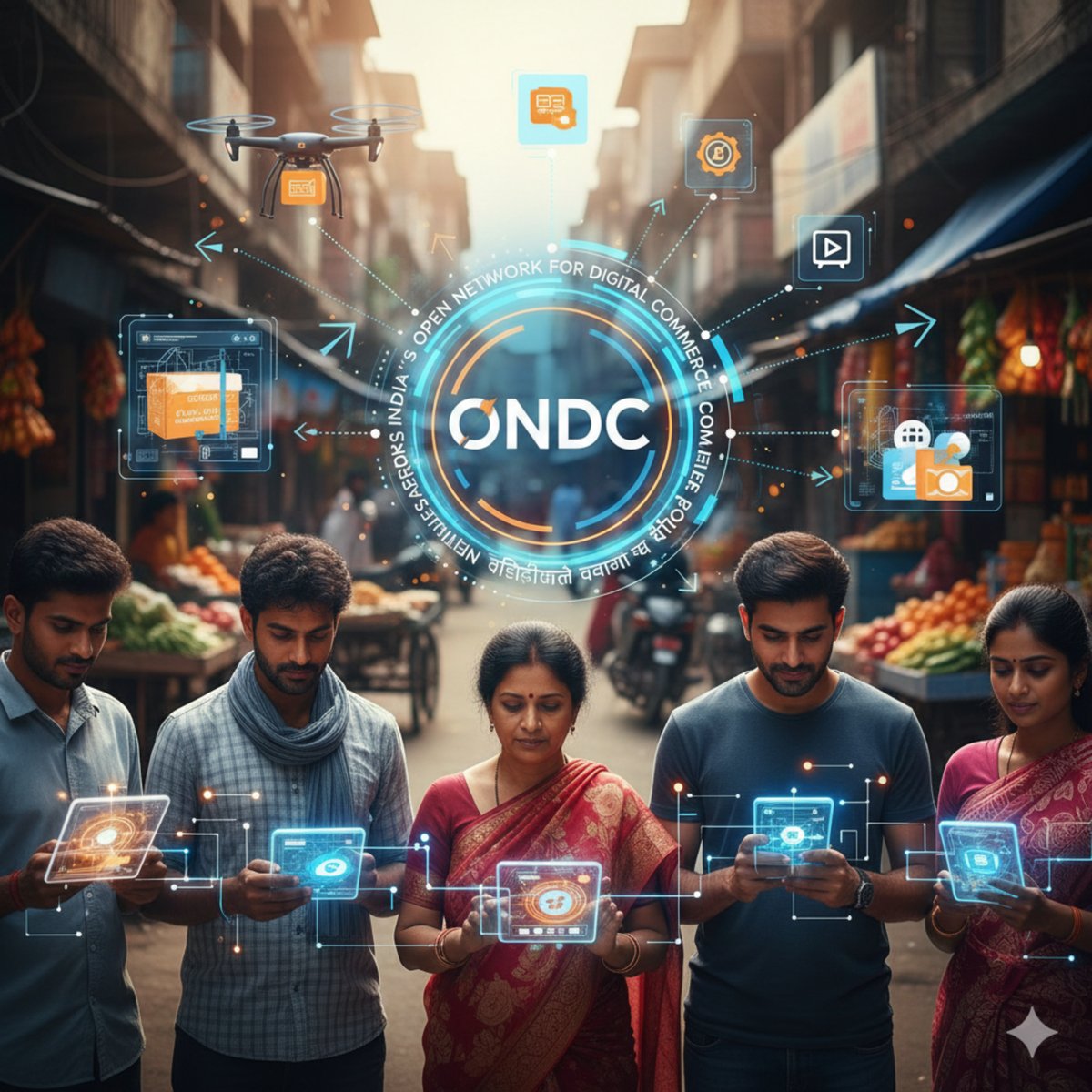
Picture this: You are searching for organic turmeric powder on your favorite shopping app. In a traditional e-commerce setup, you would only see products listed on that specific platform. But what if that same search could show you offerings from every seller across multiple platforms—local stores in your neighborhood, specialty shops three cities away, and even direct-from-farm options? This is not some far-off dream. It is the reality that India's Open Network for Digital Commerce (ONDC) is building right now.
India's digital commerce landscape has long been dominated by a handful of major platforms. While these giants revolutionized how Indians shop, they also created an ecosystem where small sellers struggled to compete and consumers had limited visibility beyond platform walls. ONDC emerged as India's bold answer to this challenge—a government-backed initiative that is fundamentally reimagining how digital commerce should work.
According to recent data, ONDC has already facilitated over 7.1 million transactions and brought 370,000 sellers onto its network across more than 800 cities. These are not just numbers—they represent real businesses finding new customers and shoppers discovering choices they never knew existed.
What Exactly is ONDC?
At its core, ONDC is not a company, an app, or even a single platform you can download from an app store. Think of it instead as a set of rules—like the grammar of a new language that lets different e-commerce platforms actually talk to each other. Just as you can send an email from Gmail to someone using Outlook without any hiccups, ONDC enables shoppers on one app to discover and buy from sellers listed on completely different apps.
The Department for Promotion of Industry and Internal Trade (DPIIT), under India's Ministry of Commerce and Industry, established ONDC as a Section 8 nonprofit company on December 31, 2021. Its mission is straightforward yet ambitious: democratize digital commerce by creating an open, interoperable ecosystem where businesses of all sizes can participate on equal footing.
The Problem ONDC Actually Solves
India has over 12 million individuals earning their livelihood through buying and selling goods and services. Yet as industry reports reveal, only about 15,000 of them—a mere 0.125 percent—have successfully tapped into e-commerce. That is not because small sellers do not want to go digital. The barriers are real and substantial.
Traditional e-commerce platforms operate as walled gardens. Each platform controls its own seller base, its own pricing structures, and its own rules. For a small business owner in a tier-2 city like Jaipur or Coimbatore, getting onto these platforms means navigating complex onboarding processes, paying hefty commission fees (sometimes up to 25 percent on food delivery), and competing against deep-pocketed brands for visibility.
From the buyer's perspective, the limitations are equally frustrating. You might find the best price for a product on one app, but that seller does not appear when you search on another platform you prefer using. Your purchase history, preferences, and reviews are siloed within each platform. ONDC tackles these pain points head-on.
How ONDC Actually Works
Understanding ONDC's architecture does not require a computer science degree, though there is sophisticated technology working behind the scenes. The network operates through three main components:
Buyer Applications: Your Window to the Network
These are the apps consumers actually interact with—applications like Paytm, Pincode by PhonePe, and Magicpin. When you search for wireless headphones on an ONDC-enabled buyer app, you are not just seeing products from that app's own inventory. You are potentially viewing offerings from thousands of sellers across the entire ONDC network.
Seller Applications: The Supply Side
On the flip side are seller applications—platforms that help businesses list their products, manage inventory, and fulfill orders. A small bookshop in Kerala can list its inventory on a seller app, and those books become discoverable to anyone browsing on any buyer app connected to ONDC. The magic is in this interoperability.
The Gateway Layer: The Invisible Conductor
Gateways are the behind-the-scenes orchestrators. When you search for something, the gateway multicasts your search to all relevant seller apps based on location, availability, and other criteria. It aggregates responses and presents you with unified results. You never interact with gateways directly, but they are the neural network that makes the whole system function seamlessly.
The Beckn Protocol: ONDC Foundation
If ONDC is the vision, the Beckn protocol is the infrastructure making it possible. Developed by tech leaders including Nandan Nilekani, Pramod Varma, and Sujith Nair, Beckn is an open protocol for decentralized digital commerce—the first of its kind globally.
Think of Beckn as similar to HTTP for websites or SMTP for emails. Just as those protocols let different systems communicate regardless of who built them, Beckn enables commerce platforms to interact without needing a central intermediary. The protocol standardizes how discovery, ordering, fulfillment, and post-fulfillment activities happen across the network.
What makes Beckn particularly powerful is its microservices architecture. According to IBM technical analysis, each component operates as an independent service communicating through APIs, particularly AsyncAPIs. This modular approach means platforms can integrate piece by piece rather than overhauling their entire systems.
Real Numbers: ONDC Growth Trajectory
Let us talk about what is actually happening on the ground. The growth has been nothing short of remarkable. In May 2024, ONDC recorded 8.9 million transactions—an all-time high representing 23 percent month-on-month growth. But the really interesting story is in how the mix is changing.
Initially, ride-hailing dominated ONDC's transaction volume through apps like Namma Yatri, accounting for 90-95 percent of all activity in early 2023. By May 2024, that picture had completely transformed. Retail orders surged to 5 million, with both grocery and food delivery categories crossing 1 million orders each for the first time. The network now includes around 535,000 sellers, with 84 percent being small businesses—exactly the demographic ONDC was designed to empower.
Perhaps most telling is the geographic spread. From pilot programs in just 5 cities in April 2022, ONDC is now operational in over 600 cities. This expansion into tier-2 and tier-3 markets represents exactly the kind of inclusive growth the initiative was designed to unlock.
The Real-World Impact: Who Benefits?
For Small Sellers: A Level Playing Field
For years, Ramesh ran a small spice shop in Bangalore. His quality saffron and organic turmeric attracted local customers, but expanding beyond his neighborhood seemed impossible against platform giants. Traditional e-commerce platforms wanted 15-25 percent commissions plus listing fees. Through ONDC, Ramesh connected with buyer apps at significantly lower commission rates, suddenly making digital commerce financially viable.
This is not hypothetical. According to Open Source For You analysis, the number of sellers on ONDC grew from just 8,500 in January 2023 to over 380,000 by early 2024. What is more significant: 70 percent of these sellers are small and medium enterprises who previously found e-commerce barriers insurmountable.
For Consumers: More Choice, Better Prices
From the shopper's perspective, ONDC's value proposition is elegantly simple: more options means better prices and more competitive quality. When you are not limited to what one platform offers, sellers naturally compete more fiercely for your business.
Take food delivery as an example. Platforms like Zomato and Swiggy typically charge restaurants 20-25 percent commission, costs inevitably passed to consumers. ONDC-enabled food ordering operates at dramatically lower commission rates, potentially reducing delivery costs while giving restaurants better margins.
For India Digital Economy
Zooming out to the macro level, ONDC's potential impact on India's economy is substantial. According to the India Brand Equity Foundation, India's e-commerce market is projected to grow from 125 billion USD in 2024 to 345 billion USD by 2030. Currently, e-retail penetration sits at only 4-5 percent of total retail—far below the 15-20 percent seen in more developed markets.
ONDC's stated goal is to boost this penetration to 25 percent of domestic digital commerce within two years of full deployment. If successful, this could add an estimated 340 billion USD in digital consumption, creating millions of jobs in logistics, warehousing, customer service, and technology development.
ONDC vs Traditional E-commerce: Key Differences
Understanding ONDC's distinctiveness requires comparing it directly with conventional platforms. Here is how they stack up across critical dimensions:
Commission Structure: Traditional platforms typically charge 15-30 percent commission, while ONDC operates at just 2-8 percent. This dramatic reduction makes digital commerce viable for small sellers who previously found platform fees prohibitive.
Seller Onboarding: Conventional platforms enforce platform-specific processes with strict criteria that often exclude smaller businesses. ONDC provides open access via any seller app, dramatically lowering entry barriers.
Data Ownership: On traditional platforms, the platform owns and controls customer data. With ONDC, sellers retain their data rights, giving them valuable insights into their customer base without platform intermediation.
Customer Visibility: Traditional platforms limit customers to that platform's inventory. ONDC enables network-wide discovery, meaning one search query reaches sellers across all participating platforms.
Entry Barriers: Conventional e-commerce requires significant technology investment, capital, and compliance knowledge. ONDC's standardized protocols reduce these barriers substantially.
Market Control: Traditional platforms operate with platform-centric control where the platform sets rules and takes a cut of every transaction. ONDC distributes control through its decentralized, democratic architecture.
Who is Actually Using ONDC Today?
ONDC has attracted an impressive array of participants across the ecosystem:
Major Buyer Apps
Paytm: The digital payments giant integrated ONDC to expand its commerce offerings beyond wallet services.
Pincode by PhonePe: Built specifically on ONDC architecture, focusing on hyperlocal shopping experiences for neighborhood commerce.
Magicpin: A local discovery platform leveraging ONDC to connect consumers with nearby businesses and offers.
Mystore: A marketplace specifically designed to empower Indian sellers through the ONDC network.
Enterprise Participation
Beyond consumer apps, major corporations have committed to the network. Microsoft announced plans to introduce social commerce through ONDC. PhonePe invested 15 million USD in developing its e-commerce platform on the network. Amazon is exploring integration possibilities, while Flipkart has already joined as a participant, according to Wikipedia data on ONDC.
Perhaps most interesting are the partnerships with Google and Meta announced in December 2023. Google plans to integrate ONDC with Google Maps, enabling direct ticket purchases for services like Kochi Metro within the app. Meta is incorporating ONDC into WhatsApp to help small businesses create conversational commerce experiences, aiming to enable 500,000 MSMEs and onboard 1.3 million kirana stores.
Real Challenges ONDC Still Faces
Let us be honest about the obstacles. Building an entirely new commerce infrastructure while established platforms have decade-long head starts is not easy. Several challenges remain:
Technical Integration Complexity
While Beckn protocol provides standardization, real-world implementation gets messy. Legacy systems do not easily retrofit to new protocols. Many small sellers lack the technical capability to integrate independently, requiring either hand-holding or third-party service providers—adding cost and complexity.
Quality Control Across the Network
Traditional platforms maintain quality through strict onboarding and ongoing monitoring. With ONDC's open architecture, maintaining consistent quality standards becomes trickier. How do you ensure a seller from a small town maintains the same delivery standards as established brands?
ONDC has introduced the DigiReady Certification portal in February 2024, helping SMEs self-assess their preparedness for digital commerce. But certification is one thing; enforcing standards consistently across thousands of sellers is another.
Consumer Awareness and Trust
Most Indian consumers have never heard of ONDC. They know Flipkart, Amazon, or Swiggy. Building awareness that shopping on any ONDC app gives you access to the whole network requires sustained consumer education. Trust takes even longer to build, especially when consumers are comfortable with brands they already know.
Where Is ONDC Headed?
ONDC CEO Thampy Koshy has expressed optimism about reaching 40-50 million monthly transactions by the end of 2024. Given that the network hit 8.9 million in May 2024, this would require aggressive growth—but not impossible considering the 23 percent month-on-month trajectory.
Category Expansion
Initially dominated by mobility (ride-hailing), ONDC has rapidly diversified. The network has expanded from 3 domain categories at launch to 13 currently, including food delivery, grocery, fashion, electronics, home and kitchen, and more. Healthcare and financial services pilots have begun, suggesting further horizontal expansion.
In January 2024, ONDC successfully tested personal loan transactions with Easy Pay and DMI Finance, indicating potential for financial product distribution across the network.
Geographic Penetration
The push into tier-2 and tier-3 cities represents ONDC's most significant opportunity. These regions are driving India e-commerce growth, with rural online shoppers expected to grow at 22 percent CAGR through 2026. ONDC's lower barriers make it particularly well-suited for these emerging markets where local sellers and consumers are just beginning their digital commerce journeys.
How Can Businesses and Consumers Participate?
For Sellers
Getting started requires choosing a seller app (also called seller-side platforms) compatible with ONDC. Several options exist with varying features and pricing:
1. Assess Digital Readiness: Use the DigiReady Certification portal to evaluate your preparedness
2. Select a Seller Platform: Choose based on your category, technical capabilities, and budget
3. Complete Integration: Set up inventory management, order processing, and logistics connections
4. List Products: Catalog your offerings with clear descriptions, pricing, and images
5. Go Live: Your products become discoverable across all ONDC buyer apps
For Consumers
Consumer participation is even simpler—just download any ONDC-enabled buyer app and start shopping. The beauty of the network is that you do not need to understand the underlying technology. Search for what you need, compare options from multiple sellers, and complete your purchase just like any other e-commerce transaction.
The Bottom Line
ONDC represents something genuinely novel in the global e-commerce landscape—a government-led initiative to democratize digital commerce through open protocols rather than corporate platforms. The concept draws inspiration from India's success with UPI, which transformed digital payments from platform-locked systems to an interoperable network anyone could access.
Will ONDC achieve its ambitious goals? The early indicators are promising. Growing from essentially zero to nearly 9 million monthly transactions in roughly two years demonstrates real momentum. The fact that 84 percent of sellers are small businesses validates the inclusive growth model.
Yet significant challenges remain. Building consumer awareness, maintaining quality standards, and competing with entrenched platforms that have deeper pockets and years of operational refinement will not be easy. Traditional e-commerce giants are not standing still either—they are improving their offerings and may even co-opt ONDC's best ideas.
What makes ONDC fascinating is not just its technical architecture or growth numbers. It is the fundamental question it asks: Should digital commerce infrastructure be controlled by private platforms or function as public digital infrastructure accessible to all? India's experiment with ONDC could well set the template for how other countries approach this question.
For sellers, especially small businesses previously locked out of digital commerce, ONDC offers a genuine opportunity to participate in India's digital economy. For consumers, it promises more choice and potentially better prices. Whether these promises fully materialize depends on execution, adoption, and whether the network can deliver consistent quality at scale.
The story of ONDC is still being written. But it is a story worth watching—not just for anyone interested in Indian commerce, but for anyone curious about how technology and policy can reshape markets toward more inclusive outcomes.