Philatelic Bureaus in India & the Philatelic Deposit Account (2026)
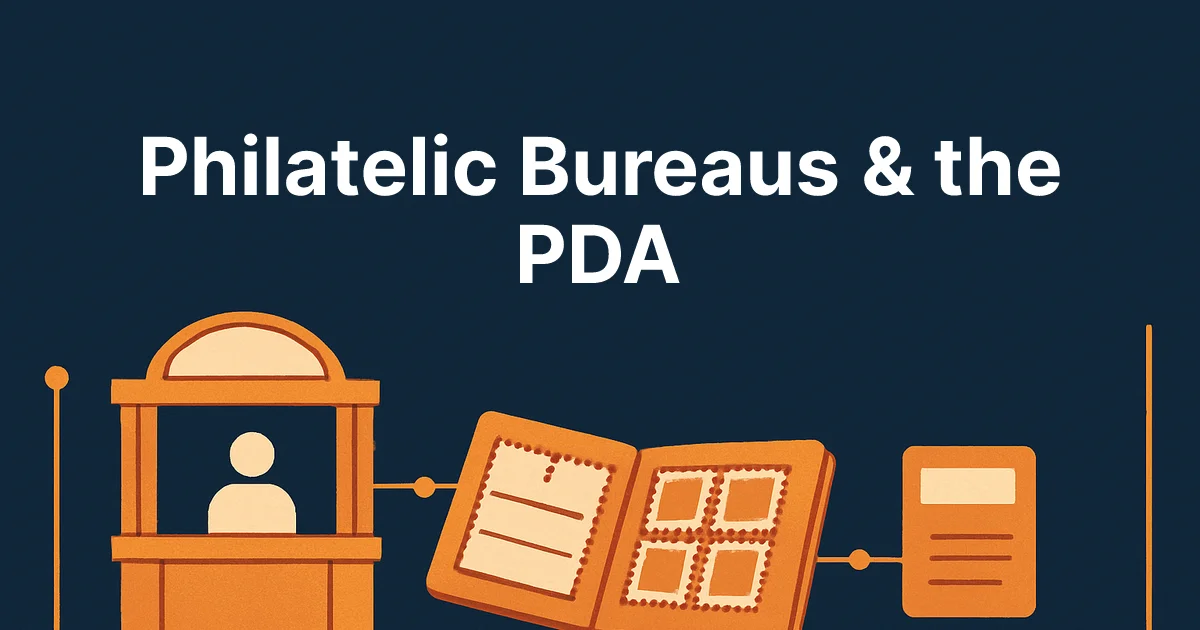
For a new collector, the hardest part of philately is not choosing what to collect but keeping up with it. India Post issues dozens of commemorative stamps a year, each available for a short window, and chasing every release across post offices is a losing game. The answer, built into the postal system itself, is the philatelic bureau and its companion, the Philatelic Deposit Account.
A philatelic bureau is a dedicated India Post counter that sells stamps, first day covers, and special issues to collectors, while a Philatelic Deposit Account automatically supplies new issues as they are released. Together they are the backbone of organised collecting in India.
This guide explains what philatelic bureaus are, how the Philatelic Deposit Account works, and how a collector uses both to build a collection without missing issues. It draws on India Post's philately service and is written for collectors at any level.
What is a philatelic bureau?
A philatelic bureau is a specialised counter within India Post dedicated to serving stamp collectors. Unlike an ordinary post office counter, which sells definitive stamps for postage, a philatelic bureau stocks commemoratives, miniature sheets, first day covers, and special philatelic products. It is the official retail point for the collecting side of the postal system.
Philatelic bureaus are located in major post offices across India's postal circles, usually in larger cities and circle headquarters. They are where a collector goes to buy new commemorative issues on release, pick up first day covers, and open a Philatelic Deposit Account. The bureau sits within the wider philately service described in the guide to philately in India.
"India Post offers a wide variety of philatelic services, including commemorative stamps, personalized My Stamp, and philatelic bureau services." (India Post, Philately, 2026.)
What philatelic bureaus sell
Philatelic bureaus sell the full range of collector-focused philatelic products that ordinary counters do not stock. The main items include current and recent commemorative stamps, first day covers with their information brochures, miniature sheets, annual stamp packs, and personalised My Stamp sheets. Some also stock philatelic accessories and older issues where available.
The bureau is the reliable source for genuine, current India Post philatelic material, which matters because the collecting market attracts fakes. Buying a first day cover or a commemorative directly from a bureau guarantees authenticity, a point covered in the guide to first day covers explained. For My Stamp in particular, the bureau is where personalised sheets are produced.
What is a Philatelic Deposit Account?
A Philatelic Deposit Account (PDA) is a standing arrangement with India Post that automatically supplies a collector with new stamp issues as they are released. The collector deposits an advance amount, and as each new commemorative, first day cover, or other selected item is issued, India Post supplies it and deducts the cost from the deposit. It removes the need to visit a bureau for every release.
The PDA is the single most useful tool for a serious collector, because it guarantees that no issue is missed. Stamps available only for a short window are delivered automatically, so the collection stays complete without constant effort. The account is opened at a philatelic bureau, and the collector specifies which categories of material to receive.
"Open a Philatelic Deposit Account to receive the latest stamps at home." (India Post philately service guidance, 2026.)
How a Philatelic Deposit Account works
The PDA works on a simple deposit-and-deduct model managed by India Post. The collector opens the account at a philatelic bureau with an initial deposit, selects the items and quantities they want, and India Post then sends each new issue and deducts its cost. When the balance runs low, the collector tops it up to keep the supply uninterrupted.
Opening the account
A PDA is opened at a philatelic bureau by completing an application and making the initial deposit. The collector provides basic details and chooses the standing order: which categories of stamps, covers, and sheets to receive, and in what quantity. The bureau staff explain the minimum deposit and the options available, and they can advise a new collector on a sensible standing order so that the right material starts arriving from the very next issue.
Receiving new issues
As India Post releases new philatelic items, the account holder receives the selected material automatically, usually by post. Each issue is supplied per the standing order, and the cost is deducted from the deposit. This is what makes the PDA so valuable: it converts the scramble to catch each release into a passive, reliable subscription.
Topping up the balance
When the deposit balance falls, the collector replenishes it to continue receiving issues. India Post notifies or shows the balance, and a top-up keeps the account active. Letting the balance lapse risks missing issues, so collectors keep an eye on it, much as they would any subscription.
Bureau versus deposit account: which to use
A philatelic bureau suits occasional, in-person buying, while a Philatelic Deposit Account suits collectors who want every issue automatically. A casual collector who picks up the occasional commemorative is well served by visiting a bureau, while a committed collector building a complete run benefits from the PDA's automatic supply. Many collectors use both, the PDA for completeness and bureau visits for extras.
| Feature | Philatelic bureau | Philatelic Deposit Account |
|---|---|---|
| How it works | Buy in person at the counter | Automatic supply by post |
| Best for | Occasional, selective buying | Complete, no-miss collecting |
| Effort | Visit on or after release | Set up once, then passive |
| Risk of missing issues | Higher (short windows) | Low (auto-delivered) |
Who can open a Philatelic Deposit Account?
A Philatelic Deposit Account can be opened by any collector, from a schoolchild to a lifelong philatelist, at a philatelic bureau. There is no special eligibility beyond completing the application and making the initial deposit, which makes the scheme broadly accessible. Schools, clubs, and institutions can also hold accounts to build educational or display collections.
This openness reflects India Post's role in promoting philately as an educational and cultural hobby. By lowering the barrier to a complete collection, the PDA encourages young and new collectors who might otherwise drop out after missing a few issues. For families, opening an account for a child is a common and affordable way to nurture the interest, building on the foundations in the guide to stamp collecting for beginners.
What it costs to use the service
The cost of using a philatelic bureau or PDA is essentially the face value of the items, plus the deposit that funds the account. Buying a commemorative at a bureau costs its face value, and a first day cover costs the stamp plus a small charge for the cover and brochure. The PDA simply pre-funds these purchases through the deposit, so there is no premium for the convenience itself.
The initial deposit for a PDA is set by India Post and is modest, intended to cover several issues before a top-up is needed. Because most Indian commemoratives are issued at low face values, a deposit stretches across many releases. The affordability is part of why the scheme suits collectors of every budget, including students.
A brief history of the philatelic bureau system
Philatelic bureaus and deposit accounts grew out of India Post's long effort to serve and grow the collecting community. As India's commemorative programme expanded after independence, the postal department established dedicated bureaus so collectors could reliably obtain new issues, and the deposit account followed as a way to automate supply. The system has served generations of Indian philatelists.
Over the decades, the bureau network spread across the postal circles, and the PDA became the standard tool for serious collectors. While the ePostOffice portal now adds an online dimension, the bureau-and-PDA model remains the institutional heart of organised collecting. Its longevity reflects how well it solves the core problem of not missing short-window issues.
How to find a philatelic bureau
Philatelic bureaus are listed by India Post and located in major post offices across the postal circles. Each state's postal circle publishes the bureaus and philatelic counters in its area, and the India Post philately pages point to them. For a collector, identifying the nearest bureau is the first practical step into organised collecting.
Where no bureau is nearby, the ePostOffice portal provides an online route to many philatelic products, covered in the guide to buying stamps online from India Post. Between a physical bureau and the online portal, most collectors can access new issues regardless of location.
It is worth using the official bureau or portal rather than relying solely on third-party sellers, because authenticity and current availability are assured at the source. While reputable dealers serve an important role, especially for older material, new issues are most reliably and cheaply obtained from India Post directly. The bureau remains the anchor of the system, with the portal extending its reach to collectors far from a major post office.
Other India Post philately schemes
Beyond the bureau and PDA, India Post runs schemes that promote philately to students and the public. Initiatives such as school philately clubs and deposit accounts aimed at young collectors are designed to introduce children to the hobby, often at a low cost. These programmes treat stamps as an educational tool as much as a collectible.
India Post also produces annual stamp packs, thematic collections, and presentation packs that bundle a year's issues for collectors who want completeness in a single purchase. These complement the PDA by offering a one-time way to acquire a full set. The range of products reflects how the postal department supports collectors at every level, from casual buyers to dedicated philatelists building complete runs.
Common questions about the PDA
The most frequent question is whether a PDA guarantees every issue, and the answer is that it supplies the categories the collector selects, automatically and by post. As long as the deposit is funded and the standing order covers the desired material, the account delivers each new release without the collector visiting a bureau. Missing an issue usually happens only if the balance lapses.
Another common question concerns delivery and security, since stamps arrive by post. India Post supplies the material through its own postal channels, and collectors keep the items in proper storage on arrival to preserve condition. For anyone unsure how to start, the simplest path is to visit the nearest bureau, ask about the minimum deposit, and open an account with a clear standing order.
Tips for using a bureau and PDA
The best results come from opening a PDA for completeness and visiting a bureau for specific extras. Setting up a deposit account ensures the core collection never misses an issue, while occasional bureau visits let a collector pick up additional covers, sheets, or older material. Keeping the deposit topped up is the single most important habit.
A few practical points help. Specify the standing order clearly when opening a PDA so the right material arrives; check the balance periodically; and keep the supplied items in proper storage to preserve their condition, as the guide to stamp albums and storage describes. Treating the PDA like any subscription keeps the collection growing smoothly.
Looking ahead
Philatelic bureaus and the Philatelic Deposit Account remain the official backbone of collecting in India, even as online channels expand. India Post continues to issue new stamps each year, and the bureau-and-PDA system ensures collectors can keep pace, whether in person or by post. As the ePostOffice portal grows, the two routes increasingly complement each other.
For any collector beyond the casual stage, opening a Philatelic Deposit Account is the single most effective step toward a complete, well-kept collection. It turns the otherwise impossible task of catching every short-window release into a quiet, automatic process, leaving the collector free to enjoy the stamps rather than chase them. Paired with a nearby bureau for occasional extras and a good storage system at home, the deposit account is the simplest foundation on which a lasting Indian collection is built.