End-to-End Distribution in India: How It Works and Why It Matters in 2026
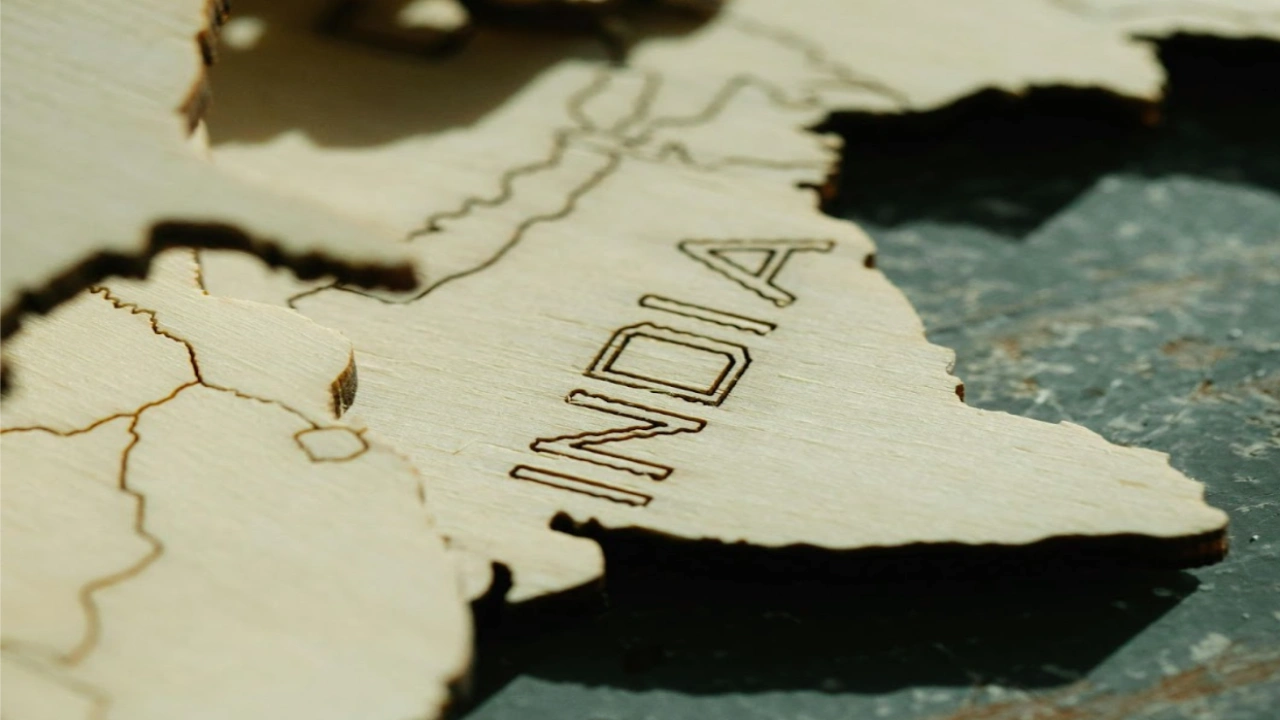
End-to-end distribution is the discipline of moving a product across India from the factory gate to the customer's door without a break in visibility or control. It spans first-mile pickup, warehousing, inventory management, order fulfilment, and last-mile delivery, and it has become one of the clearest dividing lines between businesses that scale nationally and those that stall in a few cities.
The stakes are rising because Indian buyers now expect speed and reliability that older supply chains were never built to deliver. E-commerce, quick commerce, and the push into smaller cities have turned distribution from a back-office cost into a front-line competitive advantage.
This guide explains how end-to-end distribution in India works, the technology and infrastructure behind it, the costs and challenges that still hold it back, and where the model is heading through the rest of the decade.
What is end-to-end distribution?
End-to-end distribution covers the full journey of goods through 5 connected stages, from production to final delivery. Each stage adds cost and risk, which is why managing them as one integrated flow matters more than optimising any single link — especially in a market where logistics already absorbs close to 16% of GDP.
The five stages are first-mile collection, warehousing and storage, inventory planning, order fulfilment, and last-mile delivery. When these operate on shared data, a business can see a single order from warehouse shelf to delivery confirmation.
The five stages in practice
First-mile: moving goods from the manufacturer or supplier into the distribution network.
Warehousing: storing stock close to demand, increasingly in temperature-controlled or automated facilities.
Inventory management: holding the right quantity in the right location to avoid both stockouts and dead stock.
Order fulfilment: picking, packing, and dispatching orders accurately and quickly.
Last-mile delivery: the final handoff to the customer, which is the most expensive and failure-prone leg.
Why distribution matters more than ever in India
Distribution has become a decisive factor in Indian commerce because demand is now spread across a far wider and more demanding customer base. India's logistics costs run near 16% of GDP, well above the global average of roughly 8%, according to Invest India — and distribution sits at the heart of that gap.
E-commerce has reset expectations, turning fast, reliable delivery into a baseline requirement rather than a premium. Quick-commerce platforms now promise delivery windows measured in minutes, raising the bar for every operator behind them.
Reaching buyers beyond the metros is the larger prize. Companies that can serve tier-2 and tier-3 cities reliably unlock demand that competitors with thinner networks simply cannot reach.
The shift is structural, not seasonal. Much of India's incremental consumption growth is coming from smaller cities and towns, so distribution capability increasingly decides which brands can convert that demand into sales and which are locked out by delivery costs and delays.
The scale of India's distribution challenge
The sheer geography of India makes distribution harder here than in almost any comparable market. The country spans more than 720 districts and roughly 600,000 villages, served by over 19,000 postal PIN-code areas, according to government data published on the Open Government Data Platform India.
That spread is why national reach is the headline metric distribution providers compete on. A network that covers all PIN codes can place products within reach of nearly every household in the country.
India already operates the physical backbone for this. India Post runs more than 154,000 post offices, the largest postal network in the world, reaching deep into rural areas that private carriers struggle to serve economically.
Distance and terrain compound the difficulty. Serving a buyer in a remote district can cost several times more than an identical delivery within a metro, which is why route density and shared infrastructure matter so much to the economics of national distribution.
The technology powering modern distribution
Technology is now the difference between a distribution network that reacts to problems and one that prevents them, and it is a major reason India's 3PL market has grown to roughly US$34–39 billion. Warehouse management systems, AI-based demand forecasting, and real-time tracking let operators see stock and shipments as they move, not after the fact.
AI-enabled demand planning helps position inventory closer to where orders will come from, cutting both delivery time and cost. Live dashboards give businesses end-to-end visibility, so a single order can be traced from the warehouse shelf to the doorstep.
Automation in the warehouse
Automated fulfilment centres use robotics and software to pick and pack at speeds manual operations cannot match. As order volumes climb, automation is shifting from a competitive edge to a baseline expectation for large operators.
Data integration ties it together. When warehousing, transport, and order systems share one data layer, exceptions surface early and decisions improve across the whole chain.
The payoff is measurable in service levels. Better forecasting and visibility reduce stockouts, cut the number of failed deliveries, and shorten the time between an order being placed and dispatched — the metrics on which distribution providers increasingly compete.
Warehousing and the rise of Grade-A space
Warehousing is the anchor of modern distribution, and India's stock is both growing and upgrading fast. Grade-A warehouse stock was on pace to surpass 300 million square feet by 2025, with third-party logistics operators driving a large share of that build-out, according to industry analysis from Mordor Intelligence and other research firms.
GST reform accelerated this shift by removing the tax incentive to keep many small warehouses in different states. Businesses consolidated into fewer, larger, better-located facilities, improving efficiency and lowering handling costs.
Temperature-controlled and specialised warehousing is the fastest-growing segment. Demand from pharmaceuticals, food, and quick commerce is pushing operators to build cold-chain capacity that older networks lacked.
Last-mile delivery: the hardest, costliest leg
Last-mile delivery is the most expensive and failure-prone stage of distribution, by common industry estimates accounting for up to 40–50% of total delivery cost. It is also the part customers judge most directly, because it is the only stage they actually see.
Quick commerce has made the last mile even harder. Platforms now compete on delivery windows of 10 to 30 minutes in major cities, which demands dense micro-warehousing and tightly optimised routing that traditional distribution never required.
India's policymakers have made last-mile efficiency a central goal of logistics reform. At the launch of the National Logistics Policy, the Prime Minister framed the reform around exactly this problem:
"To ensure quick last mile delivery, end transport-related challenges, save time and money of the manufacturers, prevent wastage of the agro-products, concerted efforts were made and one of the manifestations of those efforts is today's National Logistics Policy." (Prime Minister Narendra Modi, National Logistics Policy launch, 17 September 2022.)
Local partnerships and technology are how operators close the gap. Combining national infrastructure with local delivery agents and route optimisation is what makes reliable last-mile coverage possible across a market this diverse.
Government reforms reshaping distribution
Government policy has moved distribution infrastructure to the top of India's economic agenda since 2021. Prime Minister Narendra Modi launched the PM GatiShakti National Master Plan for multimodal connectivity on 13 October 2021 and the National Logistics Policy on 17 September 2022, as recorded by the Prime Minister's Office.
The National Logistics Policy targets cutting logistics costs toward the global average of roughly 8% of GDP and lifting India into the top 25 of the World Bank's Logistics Performance Index by 2030. The Prime Minister tied the reform directly to the support systems distribution depends on:
"The National Logistics Policy has immense potential for the development of infrastructure, for expansion of business and increasing employment opportunities. We have to realize these possibilities together." (Prime Minister Narendra Modi, National Logistics Policy launch, 17 September 2022.)
Digital systems back these targets. The Unified Logistics Interface Platform (ULIP) and the Open Network for Digital Commerce (ONDC) give smaller distributors access to shared infrastructure that was once reserved for the largest players.
Challenges that still slow distribution
Despite rapid progress, structural challenges keep India's distribution costs above global benchmarks. Fragmentation, the high cost of rural delivery, and the growing burden of returns remain the most persistent obstacles.
More than 90% of India's logistics sector is unorganised, which makes service quality uneven and harder to standardise across regions. Reaching the last village profitably is a genuine economic problem, not only an operational one.
Reverse logistics and returns
Returns are a fast-growing cost that distribution networks were not originally designed to handle. E-commerce return rates mean reverse logistics — moving goods back through the chain — is now a core capability rather than an afterthought.
Sustainability adds another layer. Electrifying delivery fleets and building greener warehouses raise near-term costs even as they reduce long-term risk, and operators must balance speed, cost, and emissions at once.
The road ahead for distribution in India
India's distribution sector is set for sustained expansion as the wider logistics market grows. The country's third-party logistics market alone was valued at roughly US$34–39 billion in 2024–25 and is projected to keep growing at a high single-digit annual rate, according to Mordor Intelligence.
India's improving global standing supports that outlook. The country ranked 38th of 139 economies in the World Bank's 2023 Logistics Performance Index, up six places from 44th in 2018.
For businesses, the implication is consistent: distribution is no longer a cost to minimise but a capability to invest in. As logistics costs fall toward the government's single-digit target and digital infrastructure matures, the gap between strong and weak distribution networks will only widen. The companies that treat end-to-end distribution as a strategic asset will be the ones that grow fastest across India through the rest of the decade.
Methodology
This article draws on government and industry sources, including the Open Government Data Platform India, the Prime Minister's Office, Invest India, the World Bank's Logistics Performance Index, and market research from Mordor Intelligence. Quotations are taken directly from the official record of the National Logistics Policy launch on 17 September 2022.
Market-size and warehousing figures are estimates that vary across independent research firms because of differing scope and methodology; where ranges exist, this article reports them as ranges and attributes them to the source. Geographic and postal-network figures are drawn from official government data. Figures reflect the most recent data available at the time of the publication's last review.
Frequently asked questions
What does end-to-end distribution mean?
End-to-end distribution is the management of a product's full journey from production to final delivery, covering first-mile collection, warehousing, inventory, order fulfilment, and last-mile delivery as one integrated flow rather than separate steps.
Why is distribution so expensive in India?
India's logistics costs run near 16% of GDP versus a global average of about 8%, driven by vast geography, fragmented operators, and the high cost of last-mile and rural delivery. The National Logistics Policy aims to close that gap by 2030.
How many PIN codes does a national distribution network need to cover?
India has more than 19,000 postal PIN-code areas across over 720 districts and roughly 600,000 villages. A truly national network aims to serve all of them, which is why PIN-code coverage is a common benchmark for distribution reach.
What role does technology play in distribution?
Technology provides real-time tracking, AI-based demand forecasting, and warehouse automation that together improve visibility, speed, and accuracy. These tools let businesses trace a single order from the warehouse shelf to delivery confirmation.
Key takeaways
End-to-end distribution spans five stages — first-mile, warehousing, inventory, fulfilment, and last-mile — managed as one integrated, data-connected flow.
India's logistics costs run near 16% of GDP versus a global average of roughly 8%, and distribution sits at the center of that gap.
The country's scale — over 19,000 PIN-code areas, 720+ districts, and 154,000+ India Post offices — makes national reach the headline metric for distribution networks.
Grade-A warehousing was set to pass 300 million square feet by 2025, accelerated by GST-driven consolidation into fewer, larger facilities.
India's 3PL market was worth roughly US$34–39 billion in 2024–25 and continues to grow, making distribution a strategic capability rather than a cost to minimise.